In the summer of 2013 I am planning a long cycle trip from my home in the Netherlands to the North Cape via the Baltic countries.


Last year I put together my planned route country by country. Now I have just pieced all the pieces together in an updated total route. Spring is arriving, and the concrete preparations for the trip are approaching. A visa for Russia, last new equipment and my test runs on some of the long weekends coming up. Very exciting!

Here are the routes in the individual countries. Please let me know if you have any suggestions!

No wilderness in 2052?

Posted: December 9, 2012 in Books
Tags: ,

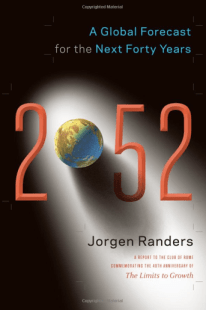
I was sad. In order to prepare for and be happy in the year 2052, we need to learn to like what we will be able to have. Tip number 4 of Jorgen Randers is
‘Don’t teach your children to love the wilderness.’
There will be little wilderness left, and kids who grow up not knowing and loving wilderness will not miss it when it is gone. A tip to being happy in the year 2052. Useful: maybe. Sad: definitely.

2052 by Jorgen Randers.

2052 by Jorgen Randers

2052 by Jorgen Randers

What will the world be like in 40 years? Not, how would we like it to be. Not, how could it be if we were to get our act together. But, how will it probably be? Jorgen Randers has a detailed model of the future, taking into account many key variables including population, GDP, emissions, food production and many others, and puts them into a consistent and realistic model. Life in the year 2052 is unpleasant, not as good as it could have been, but not catastrophic. Not yet. With the earth 2.8°C warmer than pre-industrial temperatures, but emissions and population already peaked, the jury is out on whether or not we get runaway global warming.

But, in 2052, many more live in megacities. There is little wilderness left. And nature has been severely degraded. It is a sad story. Especially since all the technical solutions exist today to avoid this. And they are not even that expensive. Due to political short-termism, and the current distribution of power, a better outcome is unlikely.

The book was interesting reading but didn’t get me too excited. Not until the last chapter when Randers gave his advise on how to be happy in the year 2052. In a crowded, changed world with little untouched and non-degraded wilderness, you should not bring up your kids to love the wilderness. That way, they will not miss it, and be able to be happy.

I love the wilderness. The icy cold winds across the arctic tundra. The lonely roads. The pointed peaks. The beautiful light. The endless joy of being there. Alone. With nature. Feeling it. Now. That future generations may never know this makes me sad.

Let’s hope and act to make the world of 2052 better than what is likely..


In the summer of 2013 I will be cycling from Eindhoven in the Netherlands to the North Cape in Norway via the Baltic countries. I have been updating my routes according to advice from cycling forums. My latest update is of my route through Finland and Sweden. Many thanks to fillarifoorum – the Finnish cycling forum, and to cykelforum.se and happymtb.org – the two swedish cycling forums.

I may be taking a detour through the Turku archipeligo due to a suggestion from Pikuski, and I will be taking some of the Sverigeleden route due to suggestions from Topfrog. Thanks for your help!!


In summer 2013 I will be cycling to the North Cape in Norway through the Baltic countries. I have been updating each leg of the route using advice from different internet forums. Thanks to the kind people on the velo.clubbers.ee forum, I have now settled down to three possible routes through Latvia and Estonia. Which one I will take I will decide when I am there. My current preference goes for the route below, along the coast, through the beach town of Pärnu in Estonia.


In summer 2013 I will be cycling from Eindhoven in the Netherlands to the North Cape in Norway. After putting together a preliminary route, I have been asking advice on different cycling internet forums. The response has been amazing. First I updated my cycling route in Poland to follow the Baltic Sea coast, and now I have updated the German leg to connect with my new Polish route.

Many thanks to the people in the 2radforum.de cycling forum. I have been given long distance routes to paste together for my trip, advice on where to go and where not. I also have a couple of people that are going to cycle along with me for a time, and even offers to stay at people’s place overnight. I am really excited with the response, and I’m looking forward to meeting up with some people from the forum next year on my trip! Thanks everyone!!

Here is my new route.


In 2013 I will be cycling from Eindhoven in the Netherlands to the North Cape via the Baltic countries. I have been putting together a planned cycle route from different sources on the internet, generating a gpx file of the route.

After speaking to a Polish guy, writing on some Polish cycle blogs, and doing some more internet research, I have decided to change my route through Poland to follow the coast, and pass through Gdansk.

Here is my new route.

To reach the coast Baltic Sea coast in Poland, I also changed my route through Germany, using a cool bike route finder called Naviki.
18.11.2012: I updated the German route following recommendations by a German cycling forum.

My route through Poland now follows the EuroVelo 10 path, passes down an amazing looking sand peninsula to a place called Hel, and passes through Gdansk.


Thanks to Pawel for inspiring me to cycle along the coast, and to check out the Polish cycling forums. And thanks to all the people on the cycling forum that helped me out.

The new Polish route is a concatination of routes obtained from bikemap.net. The main one was the EuroVelo R10 route.


The last leg of my cycle south to the bottom of Sicily. Continuing on from where I left off in Napoli in 2002, I cycled south to Sicily, climbing Etna twice, and reaching the southern most point of Italy.

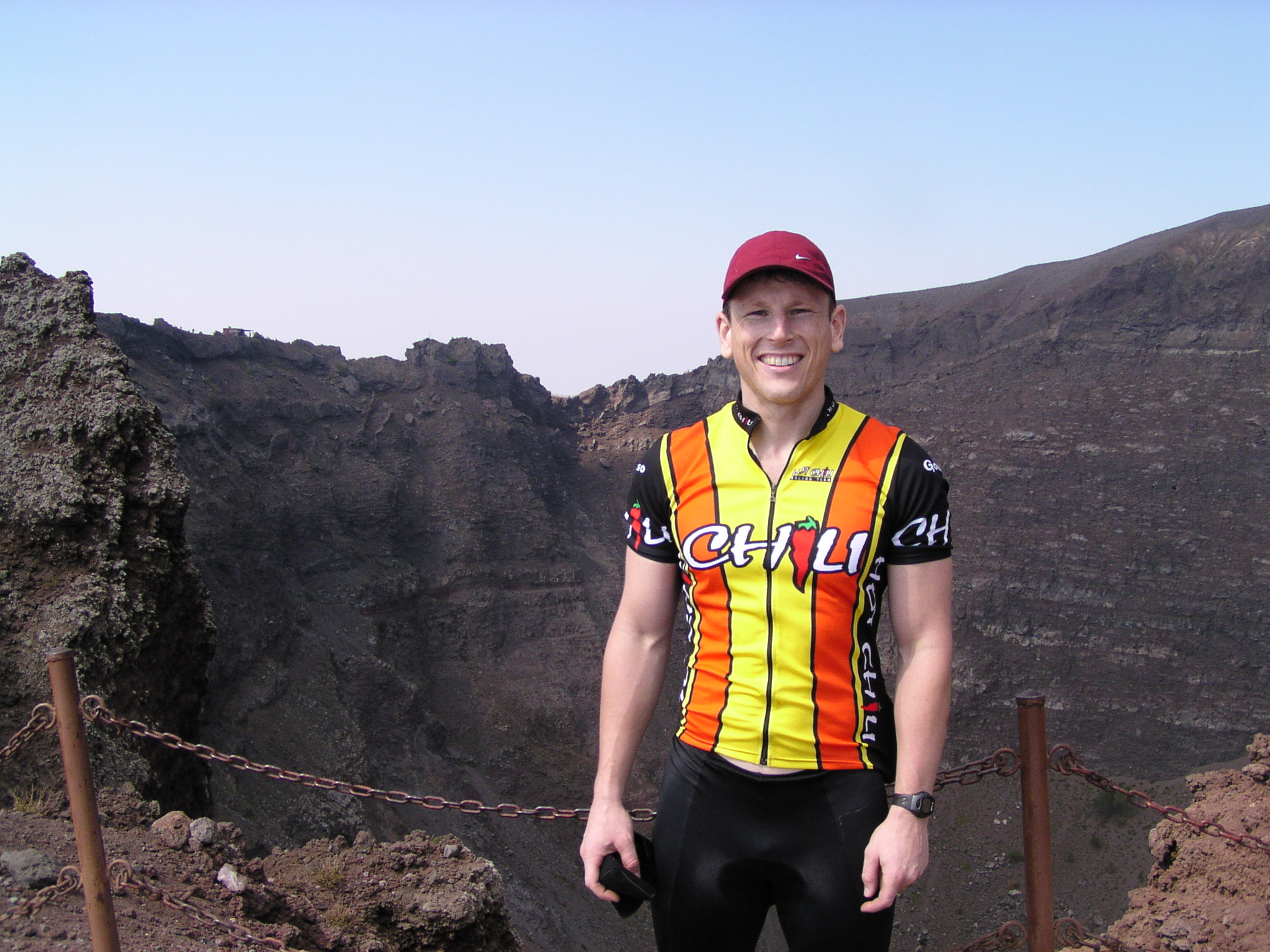
The trip started off at a volcano: Vesuvio, and ended on a volcano: Etna. On looking back at these photos, I discovered that I inaugurated my favourite cycling cap on this trip. 🙂

Vesuvio

Vesuvio

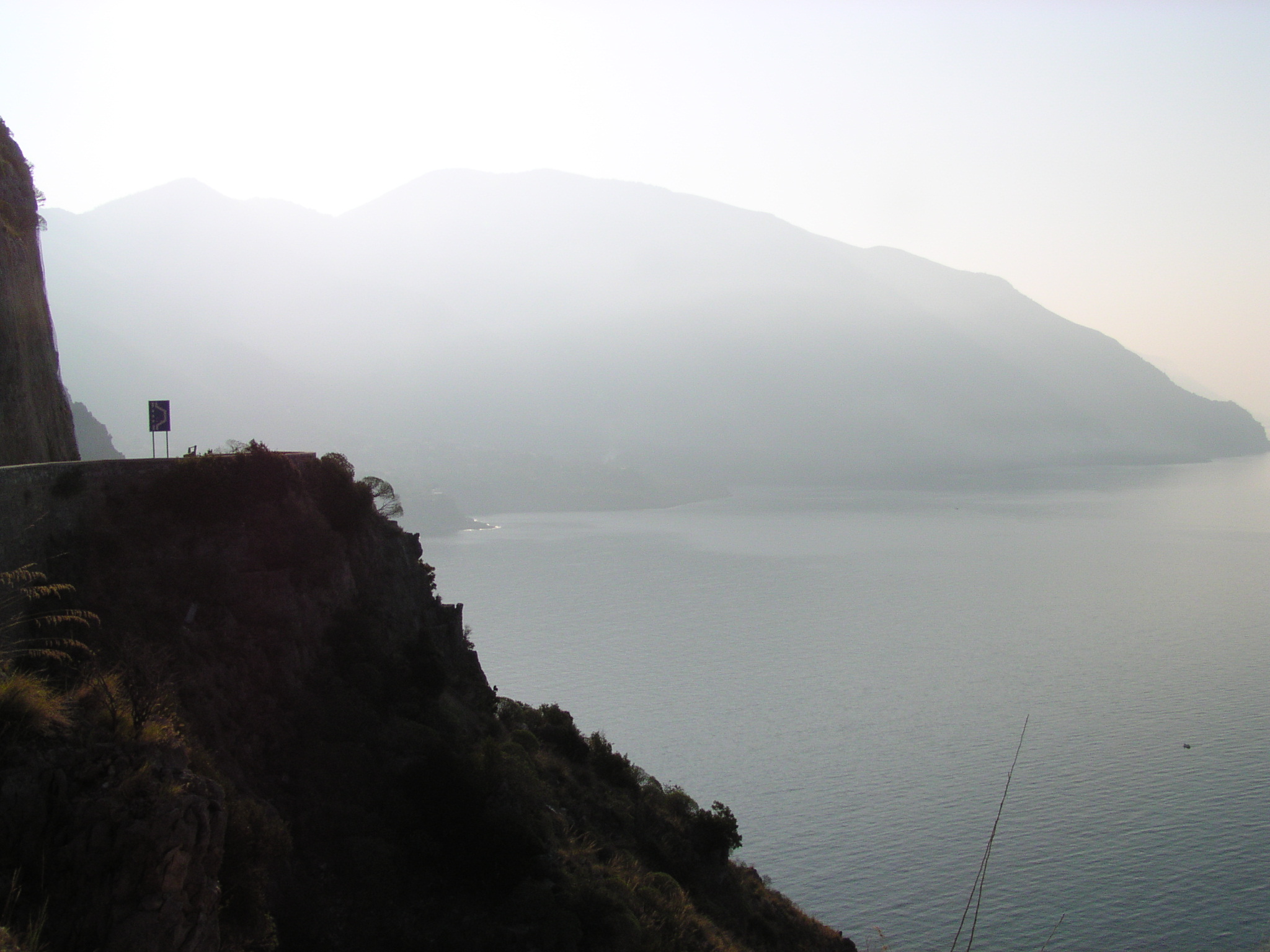
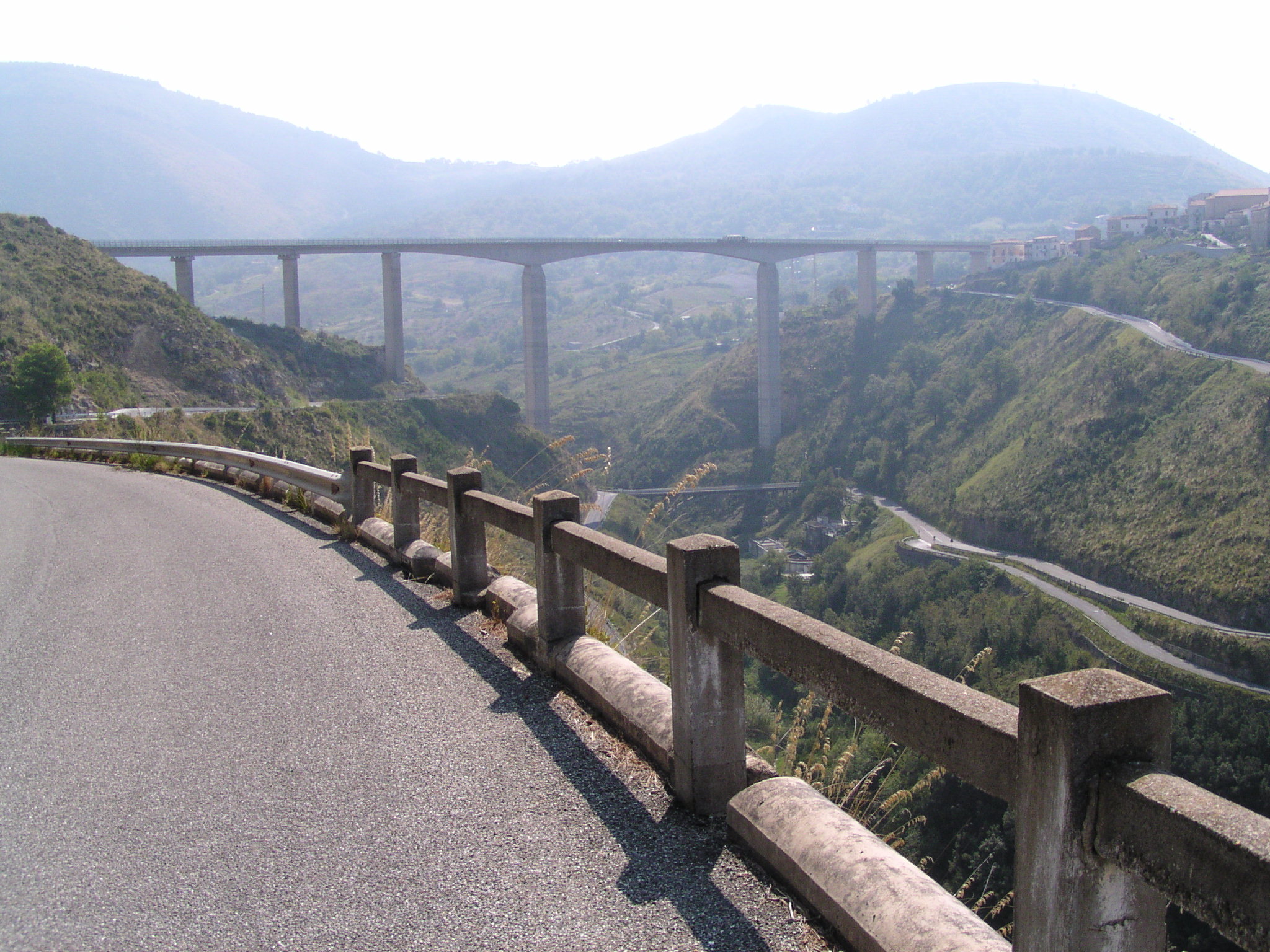
The trip followed the coast. Sometimes on roads winding up and down and around and around. Sometimes on main roads with lots of traffic. Sometimes on small roads that curved down into a valley and then wound their way back out: the same distance covered by 100m on the main road bridge. It was hot going in the Italian summer sun.

Coast road

Coast road

Coast road

Coast road

A long cut

A long cut

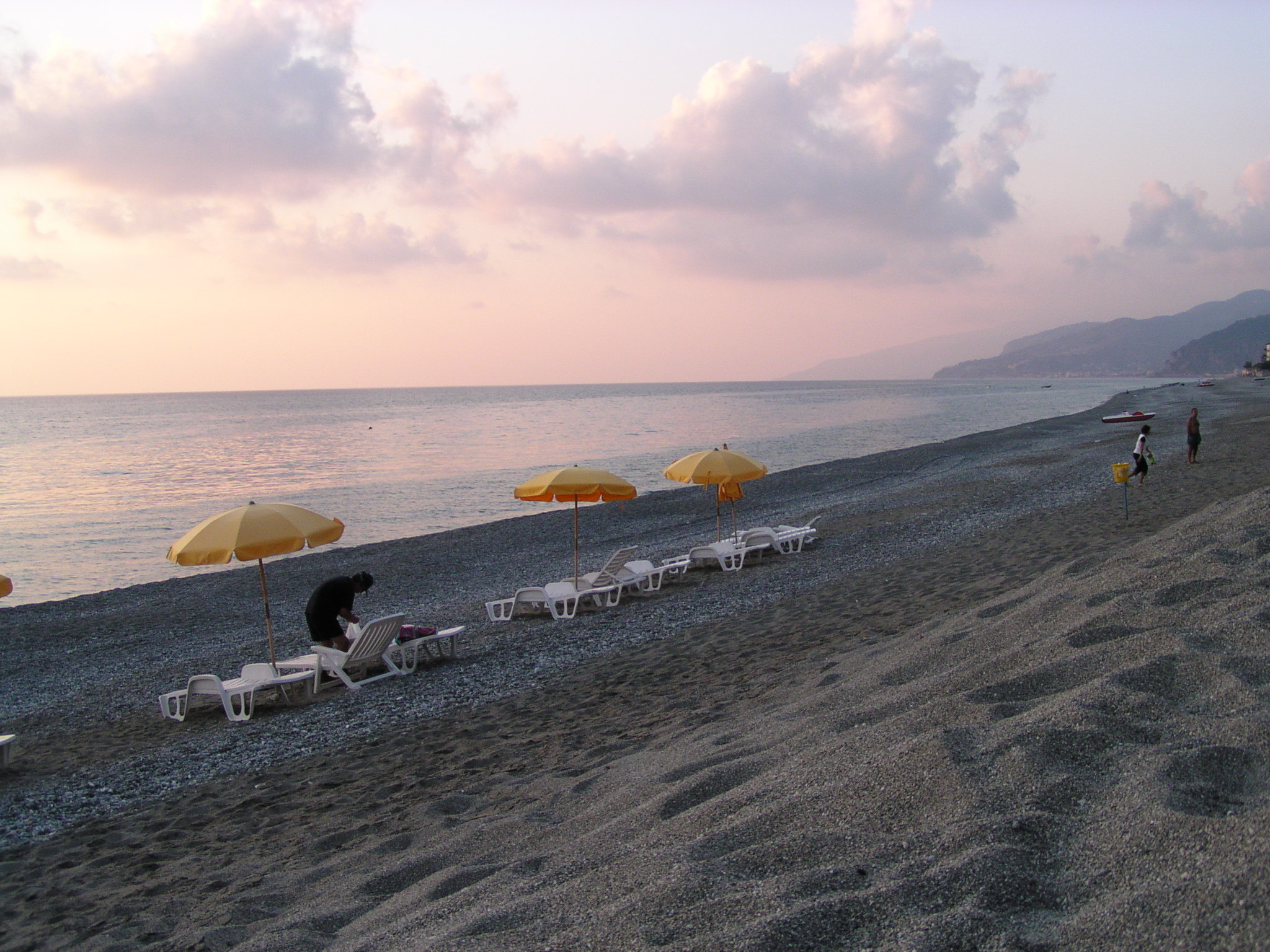
I had my fair share of beach places to stay. The stay on the beach at Fuscaldo was cut short when I discovered that I had left my passport at the previous night stop. An evening train trip back and forth. It was dark on the beach by the time I returned.

Fuscaldo

Fuscaldo

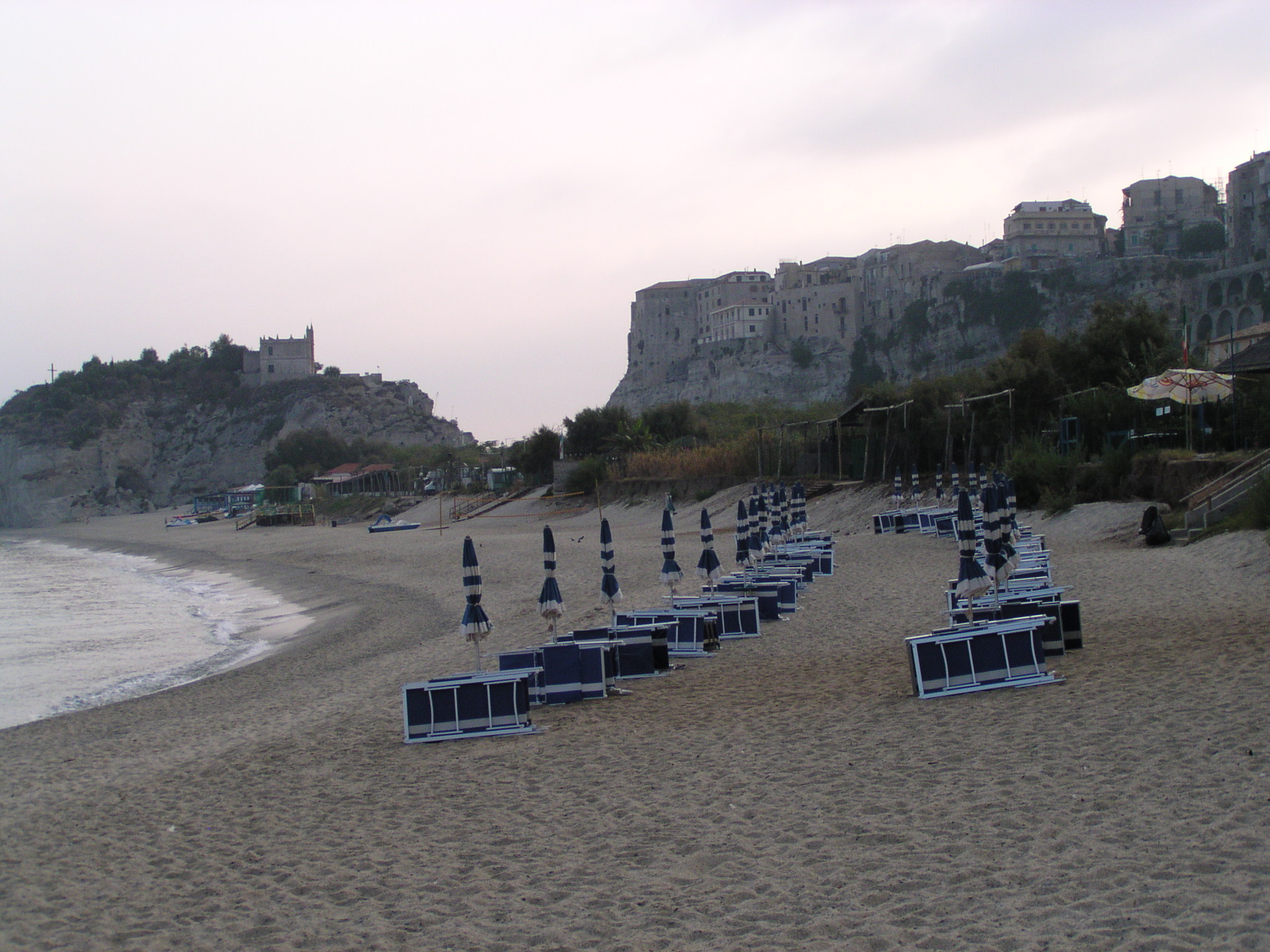
Tropea

Tropea

Tropea is a beautiful village perched on a cliff face overlooking a magical beach. It was lovely weather and a warm evening. I sat that evening at a pizzeria on the cobblestone market square. I remember that evening well, even though I am writing this 10 years later. The square was lit in a soft light from the lanterns. Happy couples were sitting facing each other over dinner and a glass of wine. Families were there, children playing, parents watching over them. Dinner took a while, but that was ok.

I sat. I studied the map, planning my route for the next day. I ate my pizza. I drank my drink. I returned to my hostel. I was tired, and my day was cycle, eat, sleep.

The cycling was fun. The scenery was nice. I was experiencing a lot. But, there was noone to share anything with. My boyfriend was home (he is not an avid cycler). I realised that such long distance trips were sometimes a lonely affair.

Also, southern Italy may not be my optimal cycling destination. It is hot, it is mountainous, and there is a lot of cycling on main roads with lots of traffic. This trip was my last long cycle trip until 2012. After this trip I started long distance running, and ran in quite a few marathons. The same physical exertion, in a shorter time span.

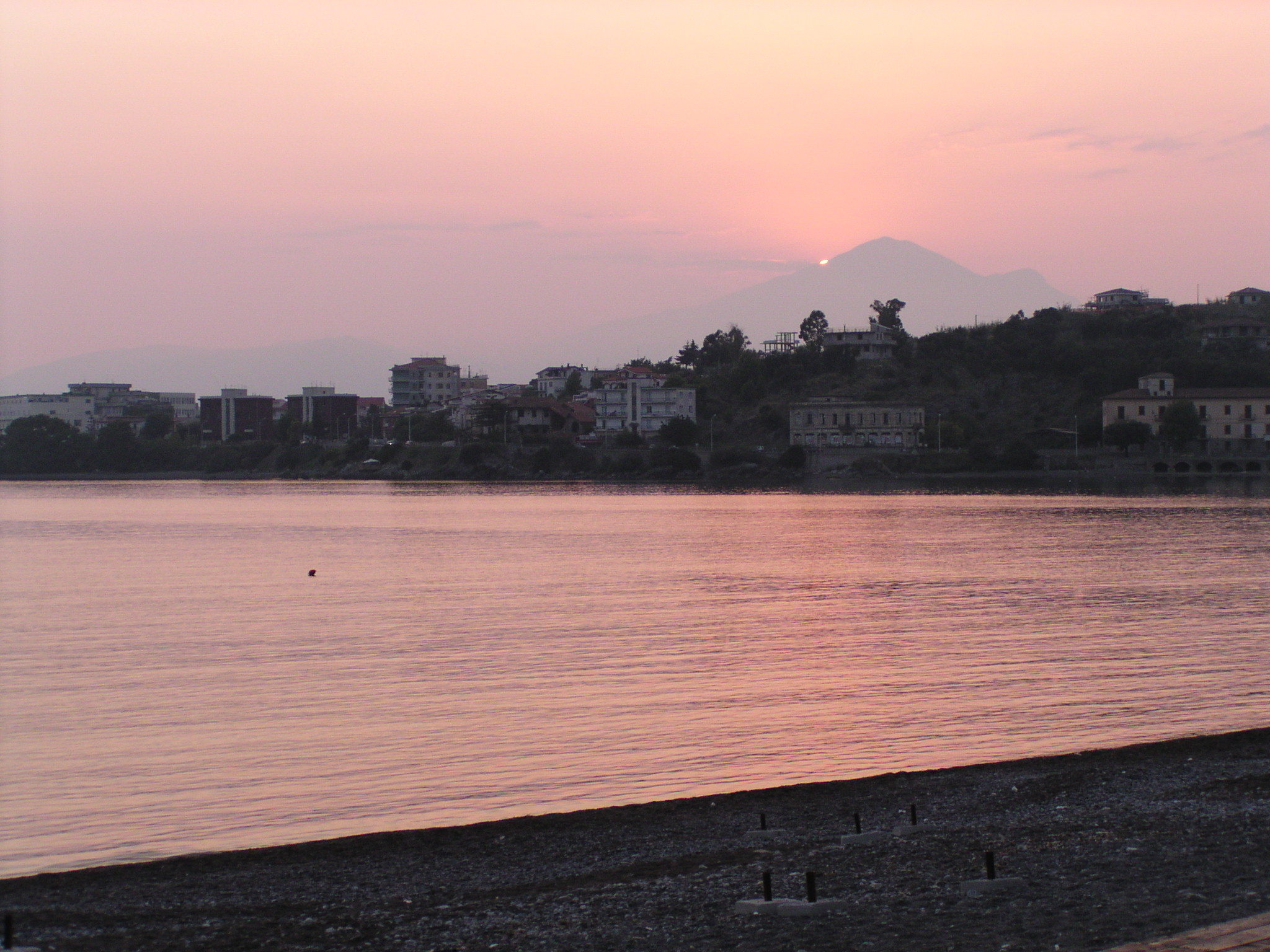
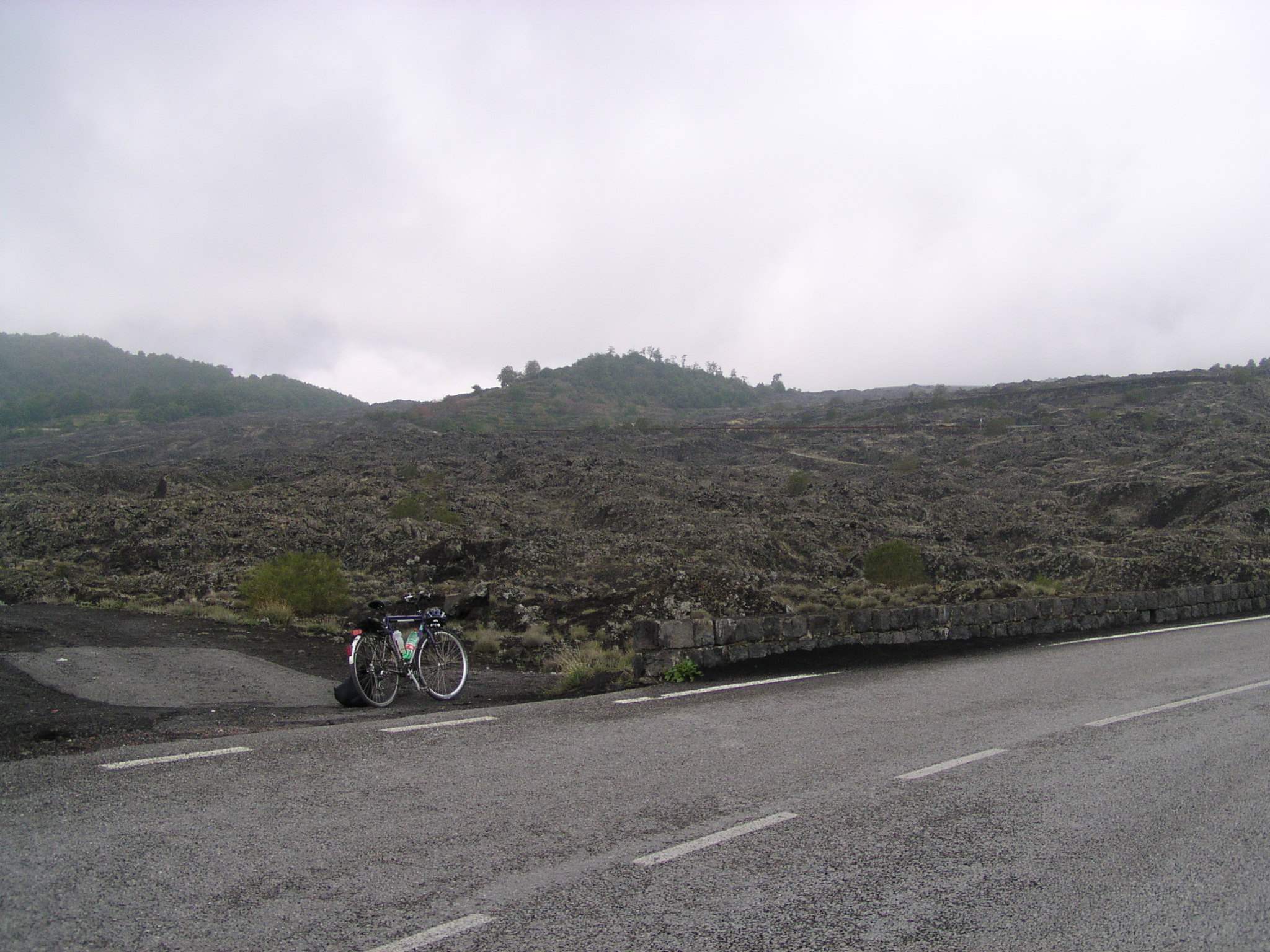
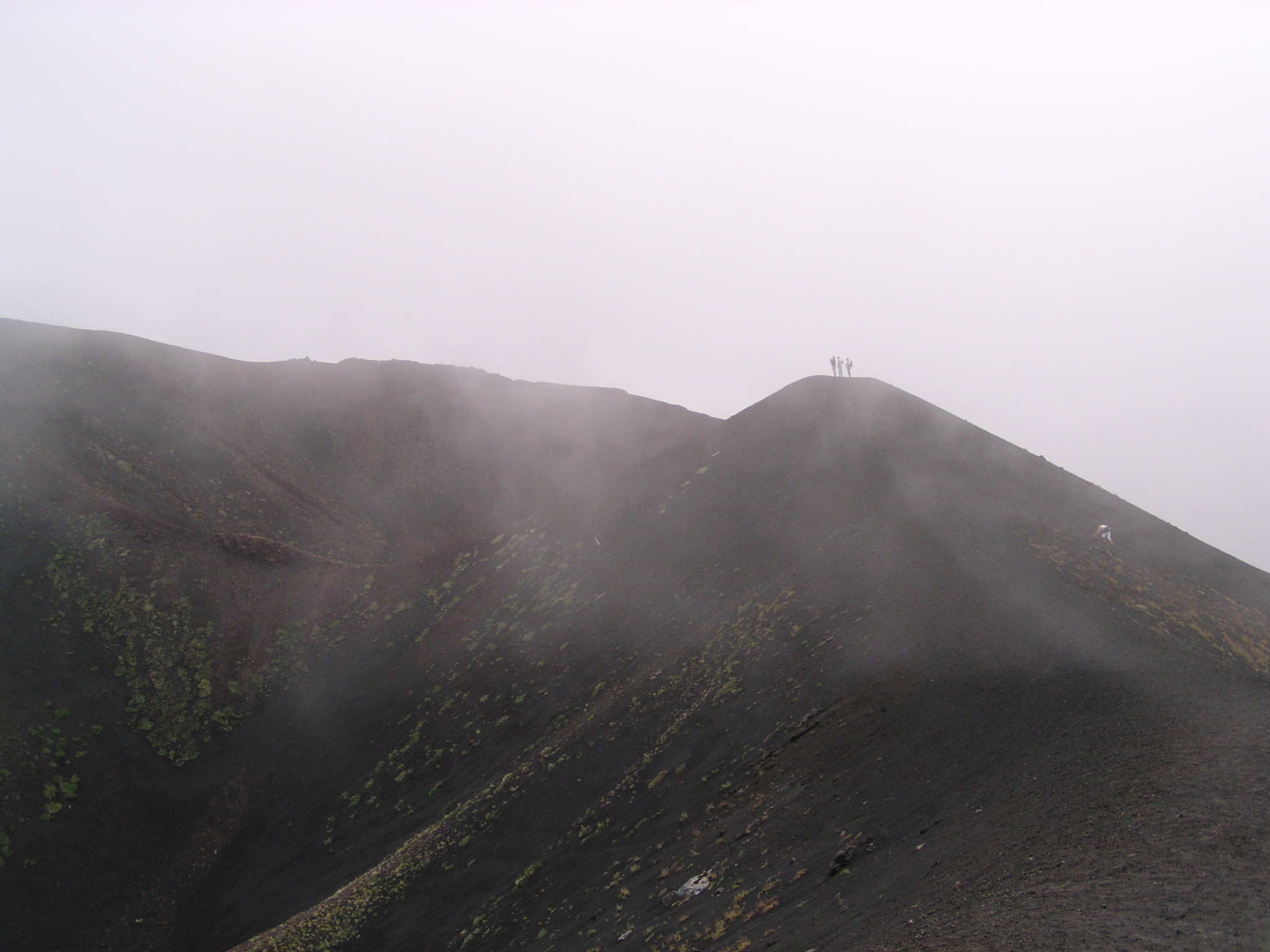
Then the boat over to Sicily, and up Etna: twice. From the hot, sunny coast to the cold, barren, lava landscape of a mighty volcano.

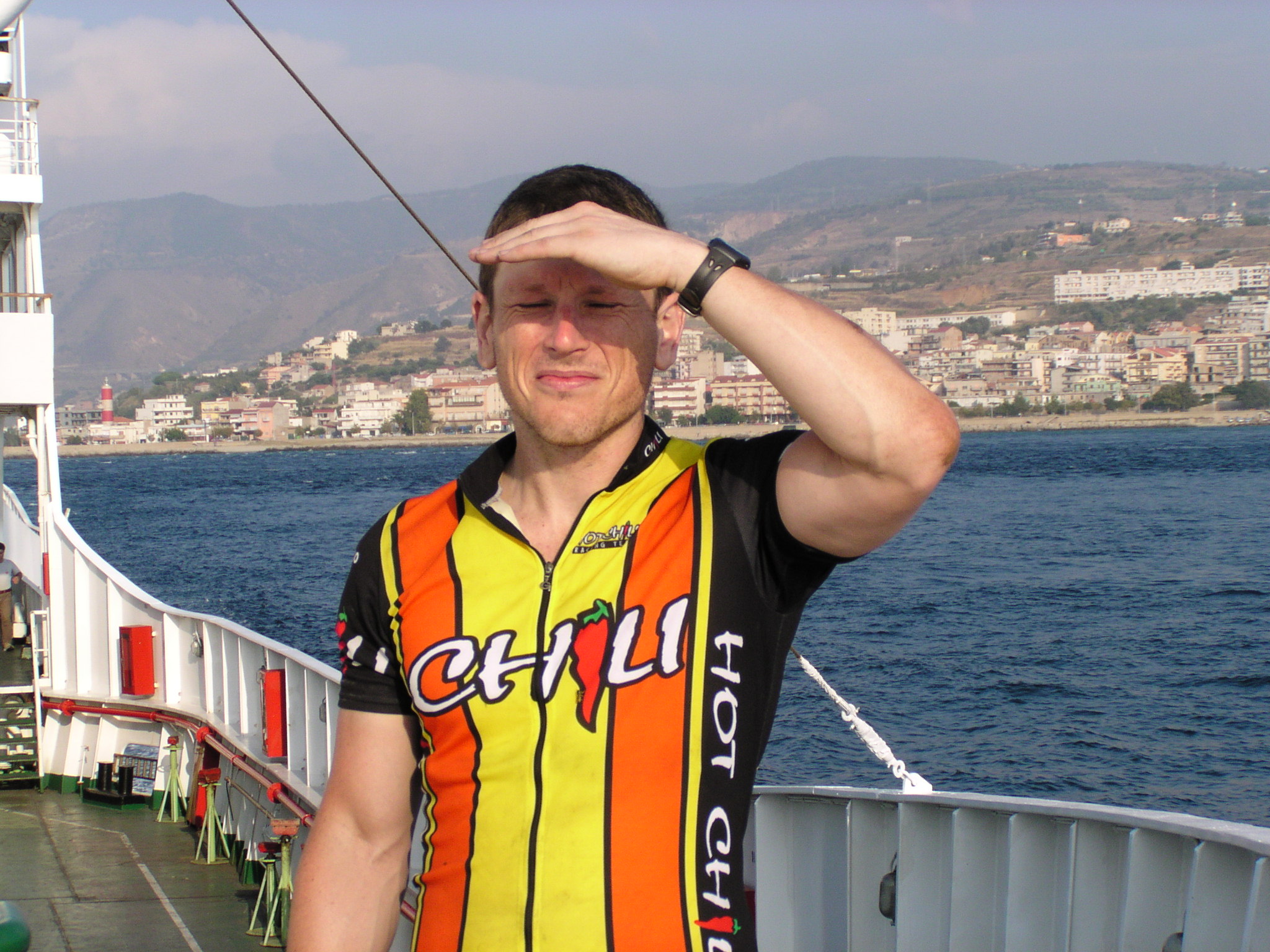
The ferry to Sicily

The ferry to Sicily

Lava on Etna

Lava on Etna

Etna

Etna

The road to Etna

The road to Etna

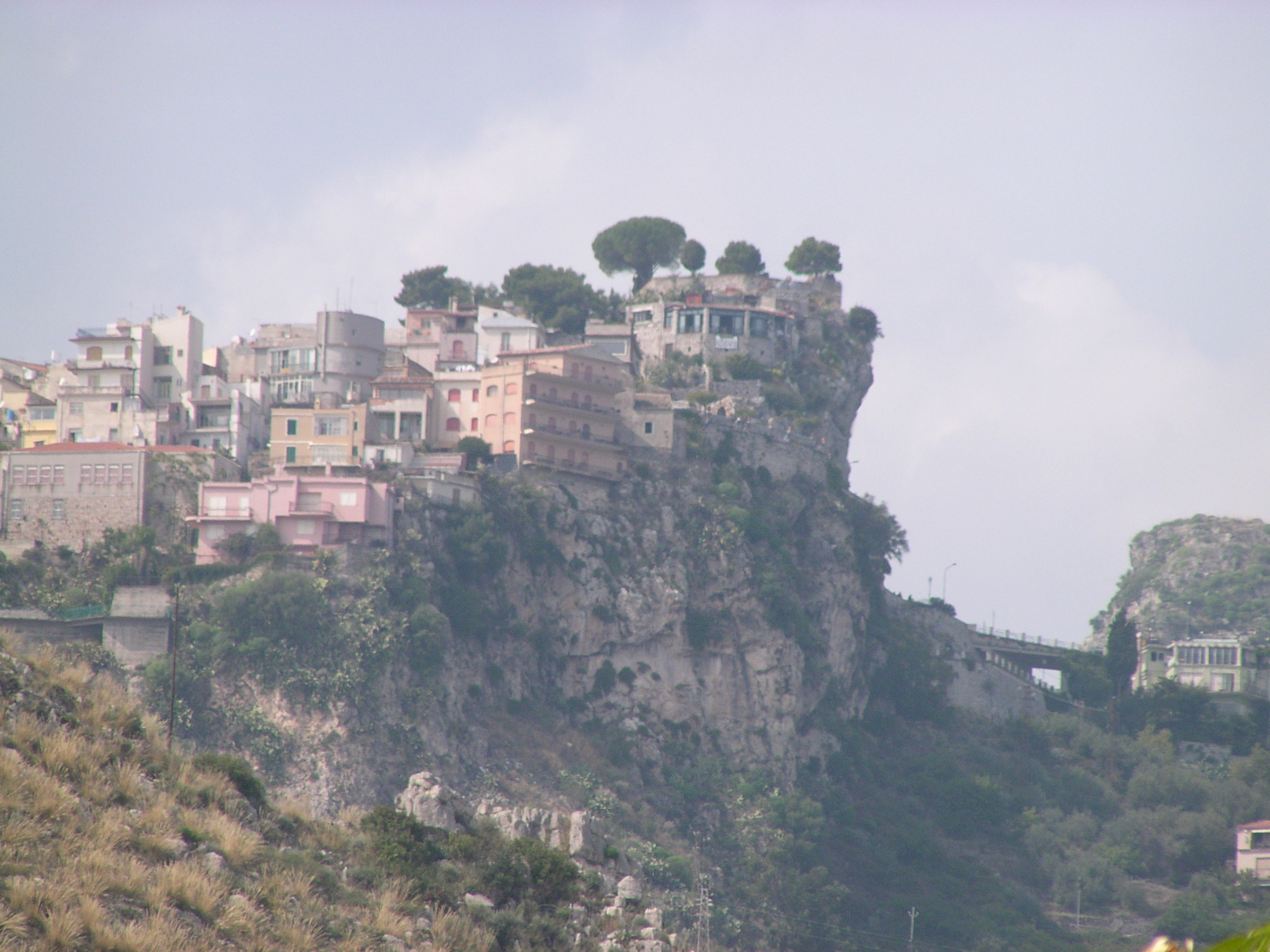
My friend Elke and her boyfriend were touring around Sicily at the time, and so I had a day off with them. We went to the beautiful Taormina.

Taormina

Taormina

Taormina

Taormina

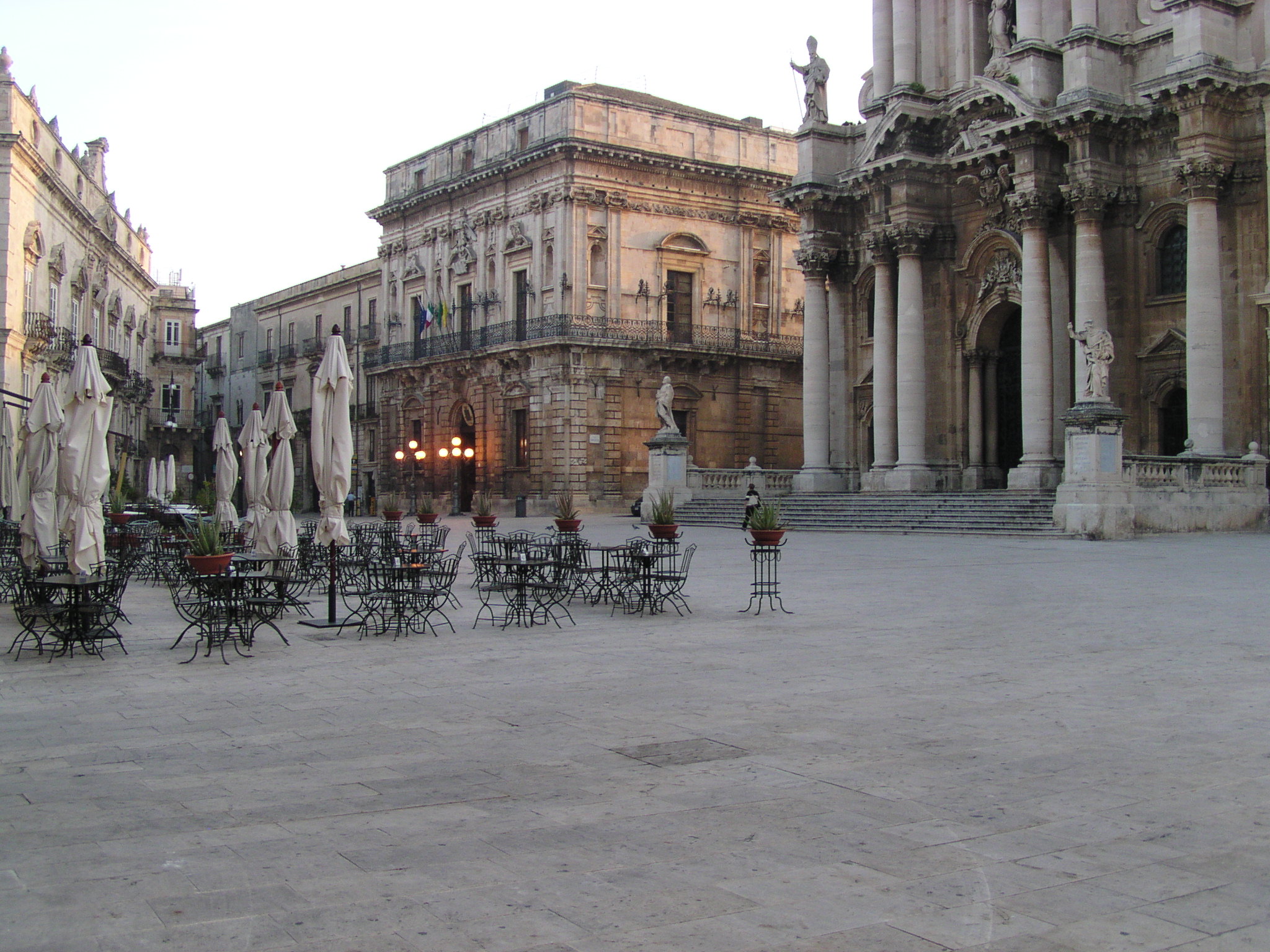
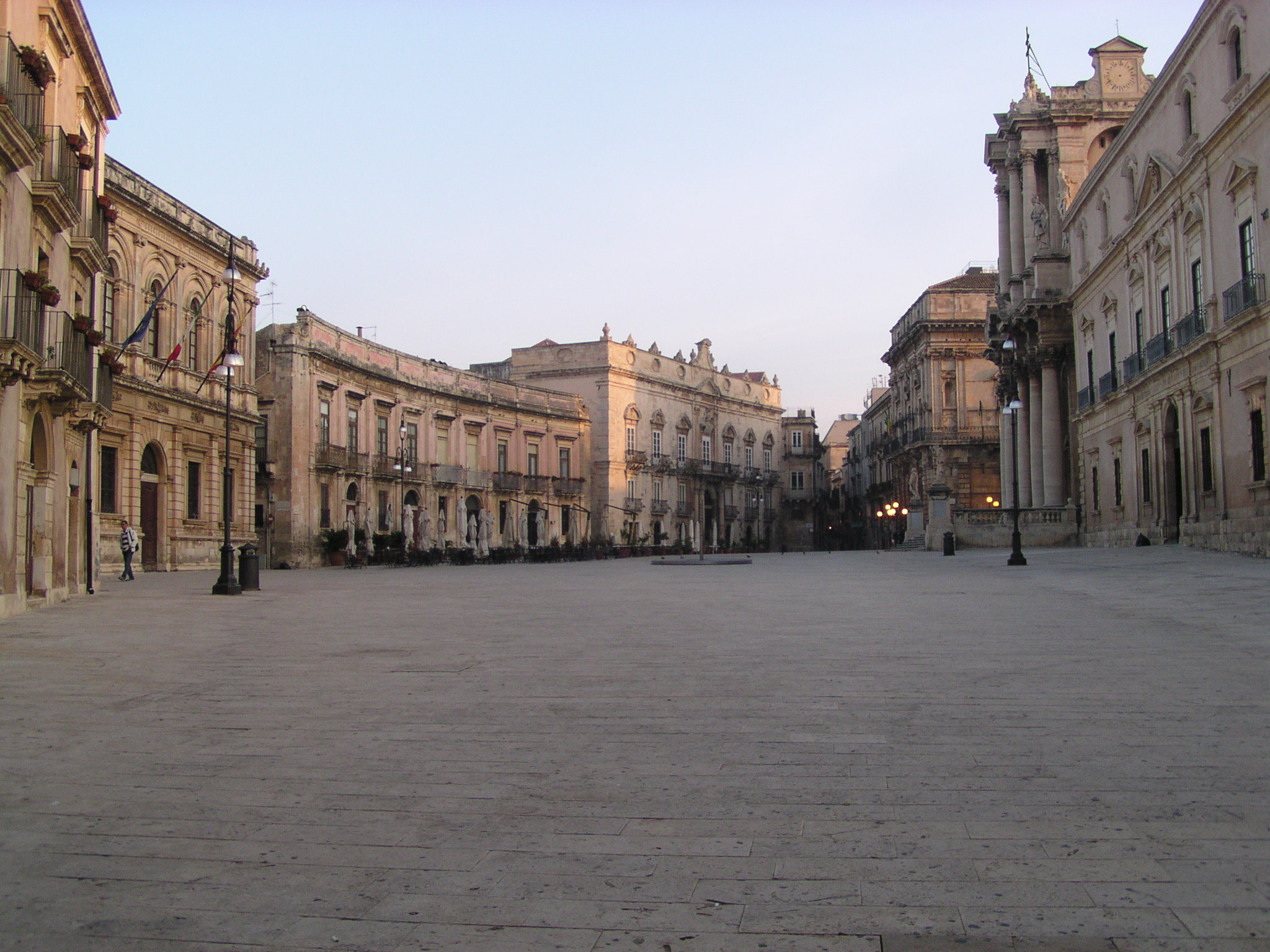
Siracusa is another beautiful city in the south of Sicily. I spent a lovely evening there wandering around the medieval streets.

Siracusa

Siracusa

Siracusa

Siracusa

I arrived in the southernmost town on Sicily: Portopalo. I then made my way to Modica where I took the bus to Palermo. There were no camping grounds in the middle of Sicily, and I wouldn’t be able to cycle across in one day. And time was running short. My trip to the south of Italy was at its end.

And that was my last bike trip for nearly 10 years.
What made me decide to go on another long bike trip? Well, it was Norway. I was there in the winter of 2011, and I was captivated by Tromsø. I was there in the middle of winter when the sun only approaches the horizon and bathes the winter landscape in a deep blue twilight. I wanted to see this place again, but in the eternal sun of summer. Also, Norway is cold. No worries about excessive sweating. And the roads aren’t busy. Oh, and the scenery is absolutely spectacular.

On that trip in Norway, I didn’t experience the lonliness. I met lots of fellow cyclists. And, yes: blogging and facebook made me feel like I was sharing my trip with my loved ones. The wonders of modern technology! In 2013 I will be doing my longest bike trip yet. I am excited already!


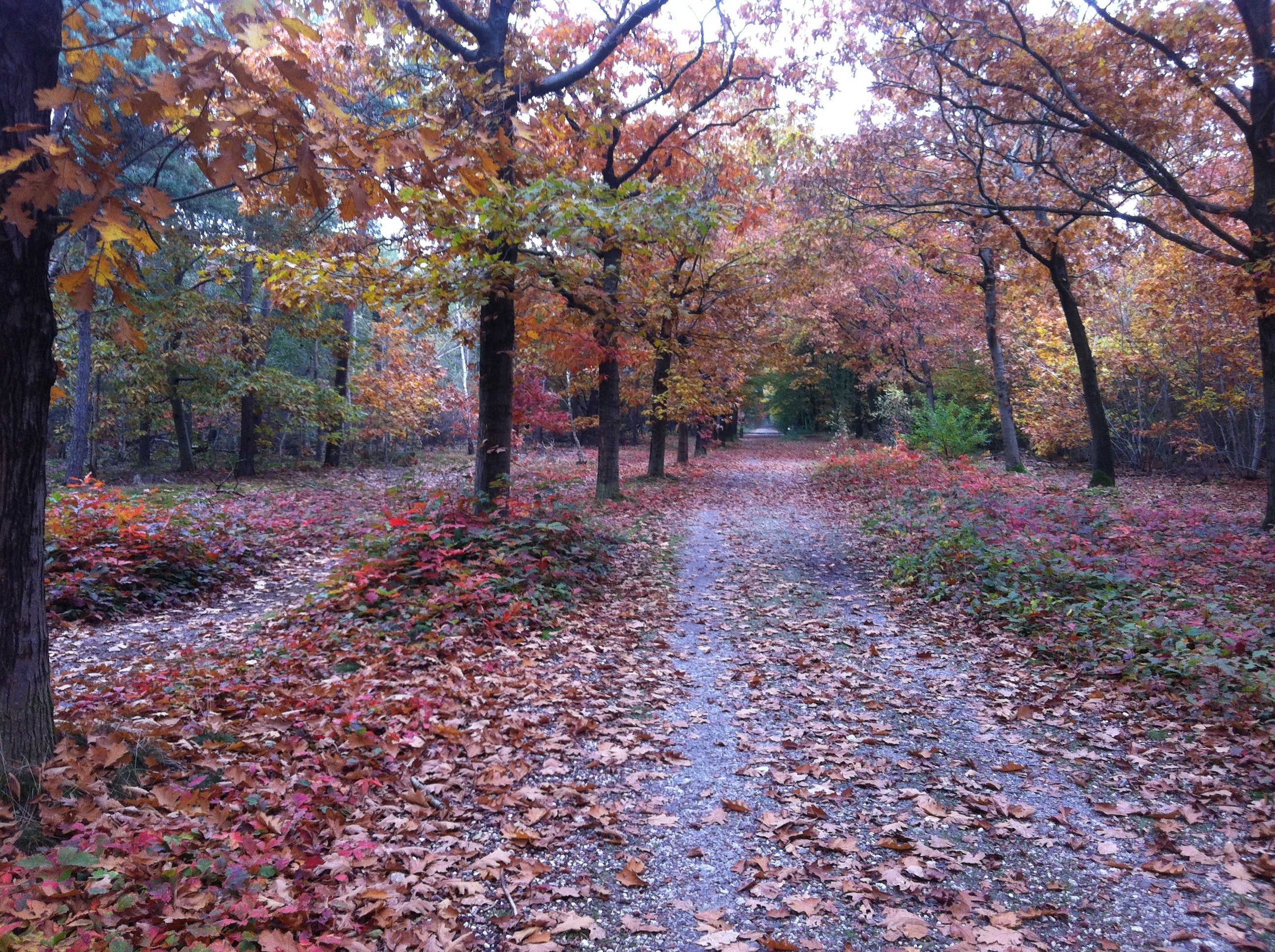
Probably the last warm weather weekend of the year had to be taken advantage of. A bike trip in the autumn orange light, through forests of bright red and yellow leaved trees, their colours raining on me down as I cycled past. A 315 km trip from Eindhoven to Münster in Germany.

The plan was to cycle with Volker (who joined me on some of my cycle trip in Norway this summer) from his parent’s house in Rheine to Münster: the bicycle Mecca of Germany. On Saturday I put my head down and aimed at maximum kilometres in order to amble to Rheine on Sunday by noon, and then to Münster on Sunday afternoon.

I left Eindhoven on Saturday at 06:30 in the dark and headed north east. It was an overcast day as I cycled through the cow studded fields, and through the bright red forests with the trees shedding their leaves.

The bright red of the autumn forests

The bright red of the autumn forests


Enschede in the Netherlands was my distant destination, and I made it just before nightfall at 1830.

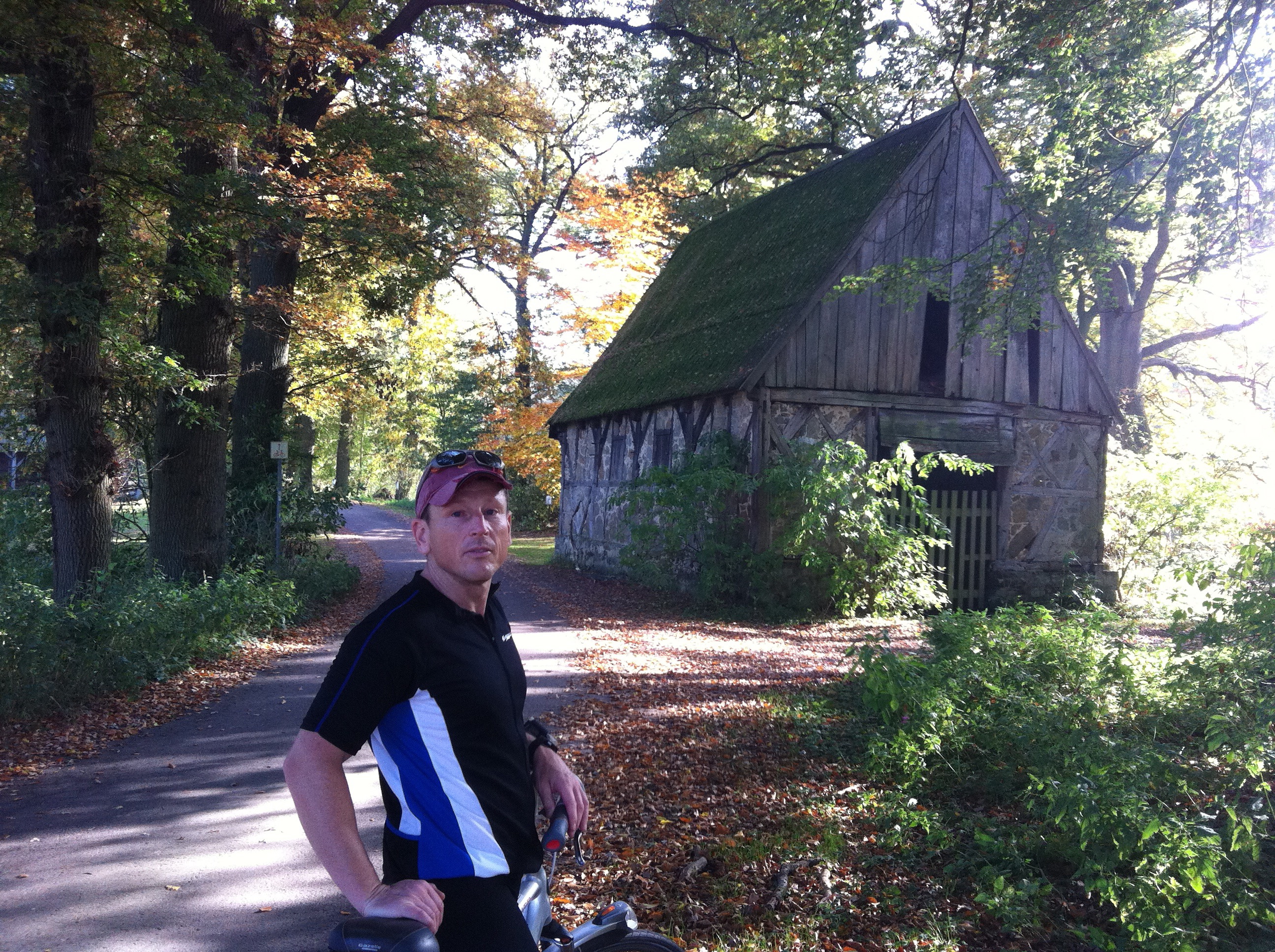
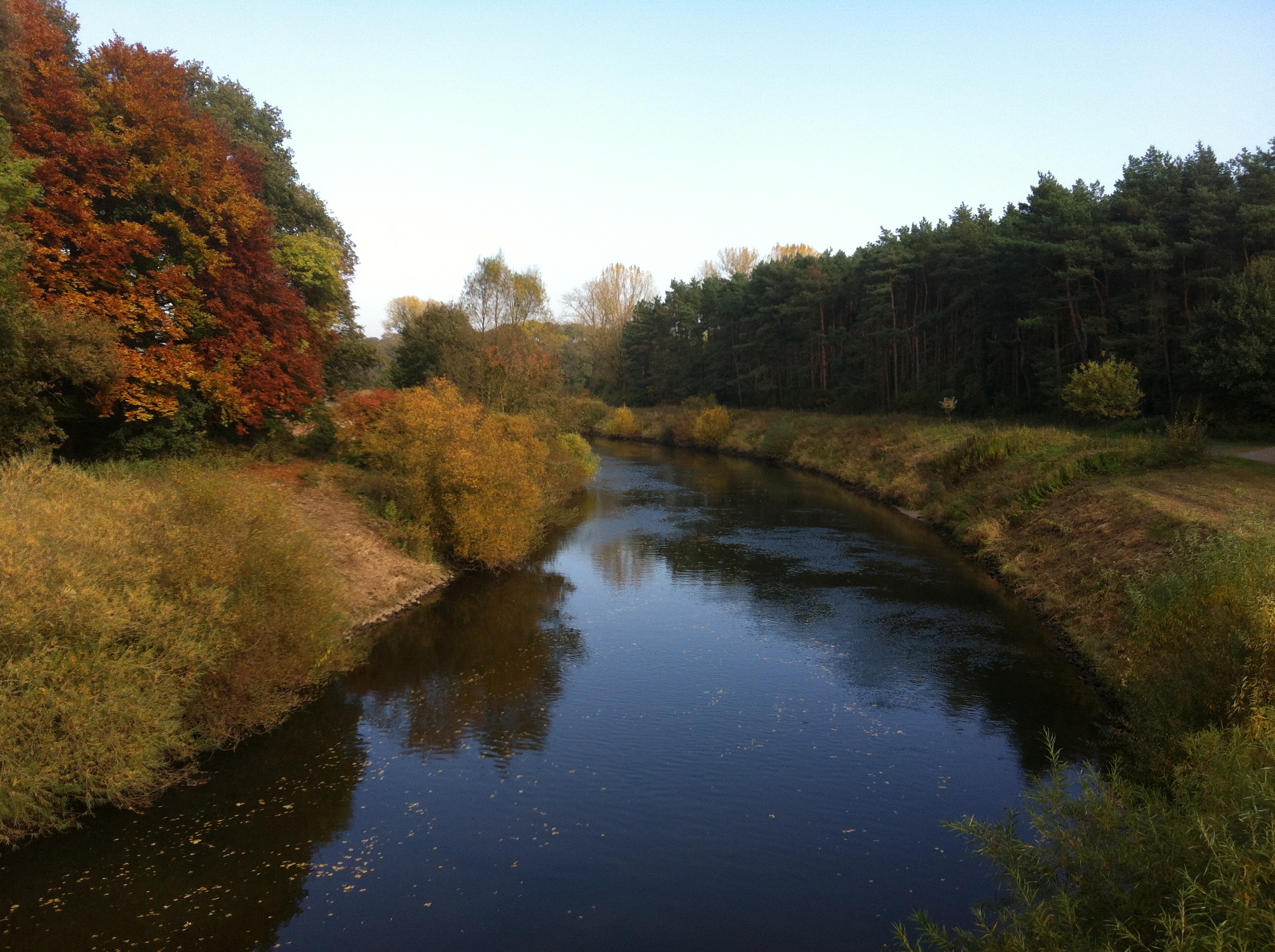
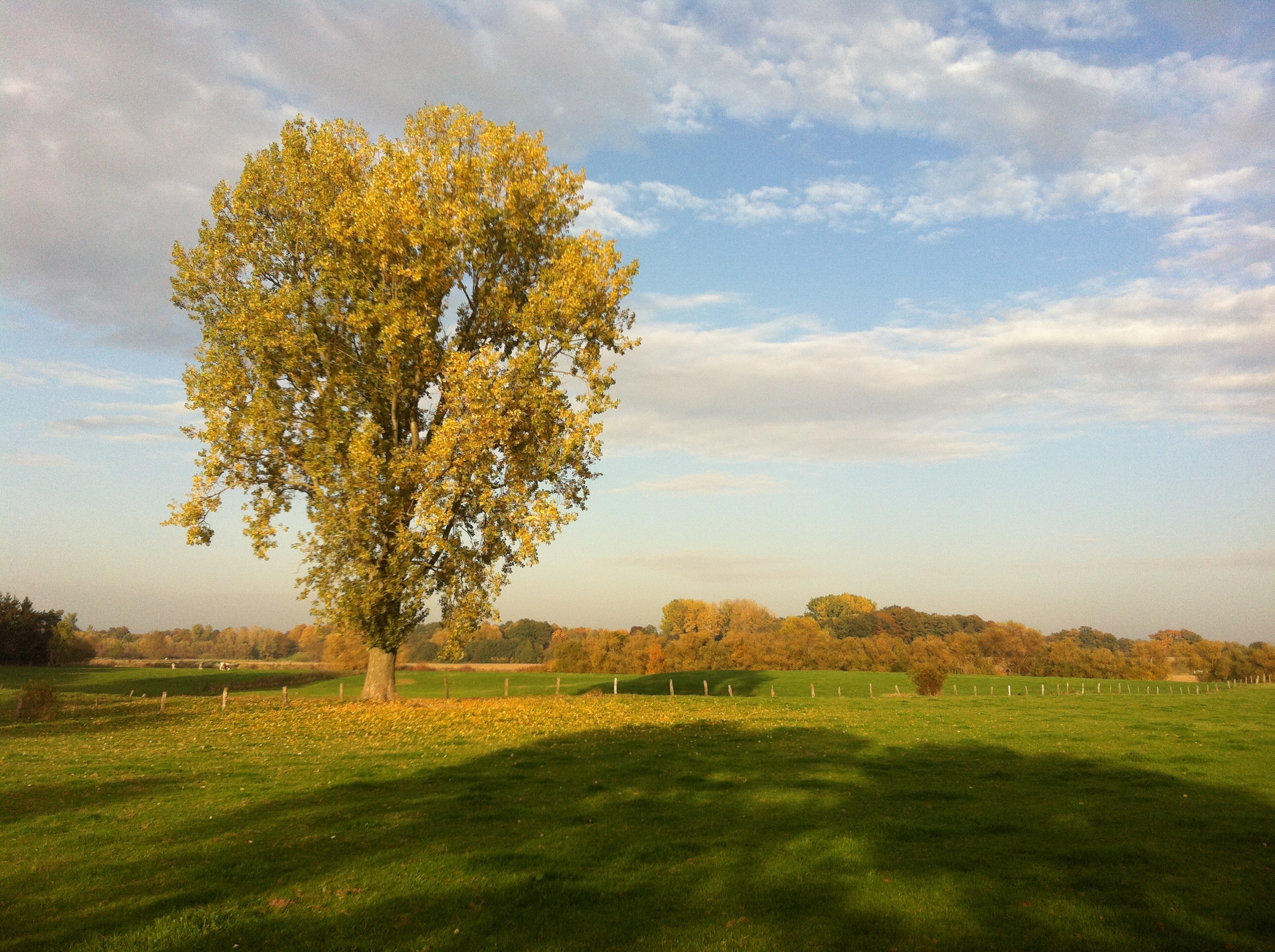
But Sunday was the gem of the trip. Starting misty, the autumn day turned sunny, warm and perfect. The mid afternoon light made highlighted beautiful contrasts in the forest and river surroundings. As the afternoon turned into evening, and the light softened to its mellow departure, the colours became rich and orange. What a lovely light to experience this beautiful nature.

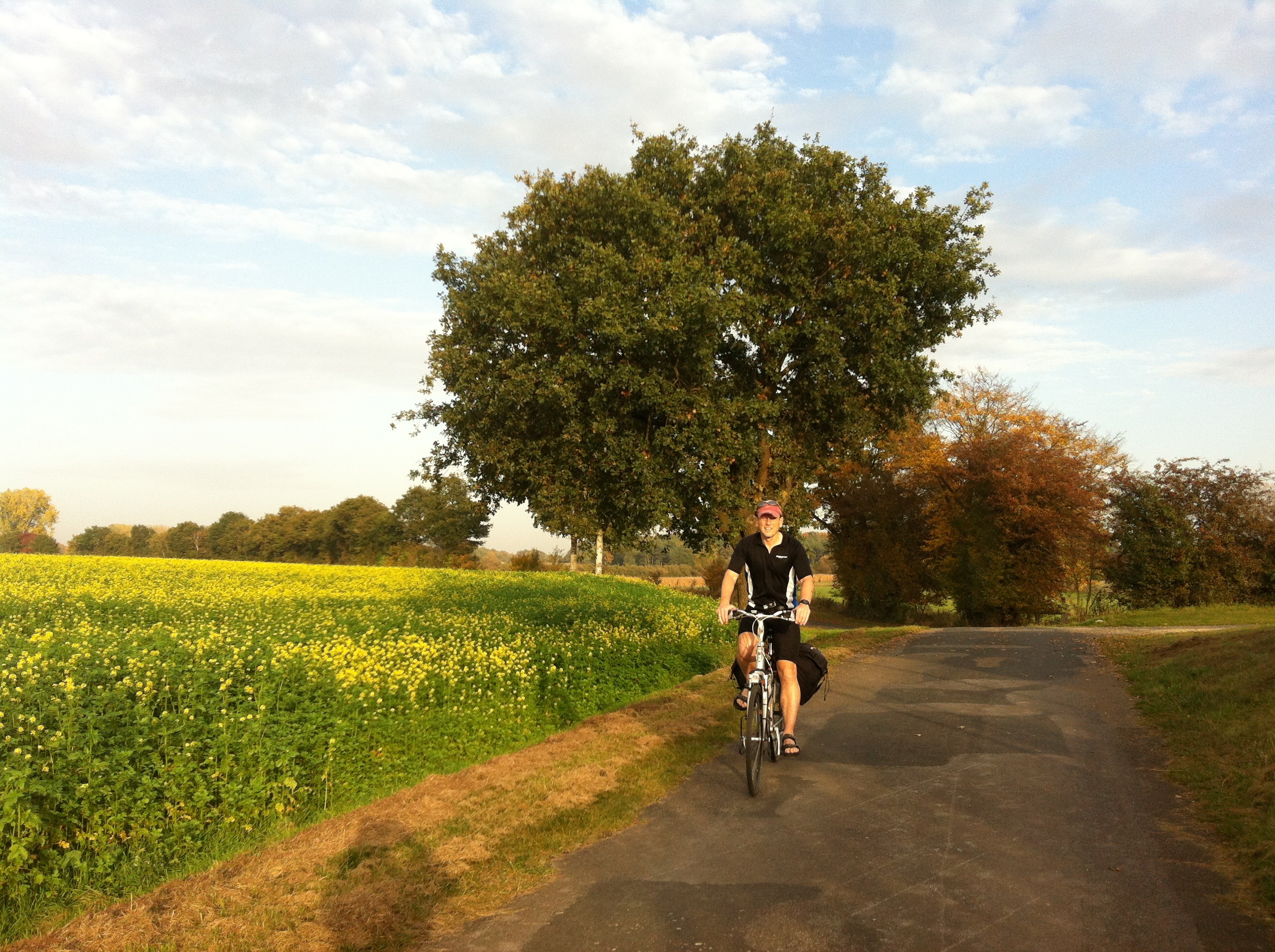
Me near the Ems River

Me near the Ems River

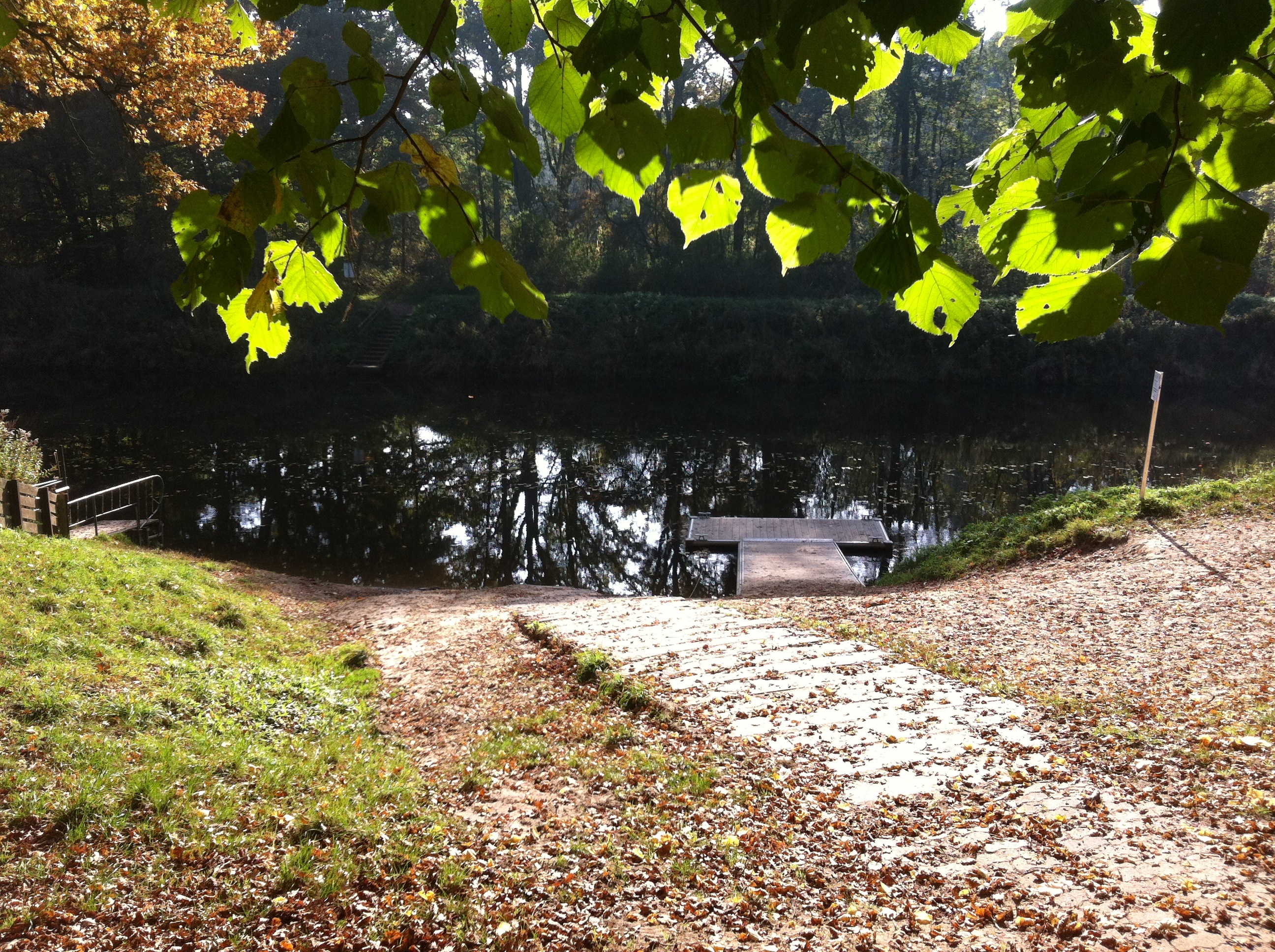
The Ems River

The Ems River

The Ems River

The Ems River

Orange tree in the mellow late afternoon light

Orange tree in the mellow late afternoon light

Cycling in the soft evening ilght

Cycling in the soft evening ilght

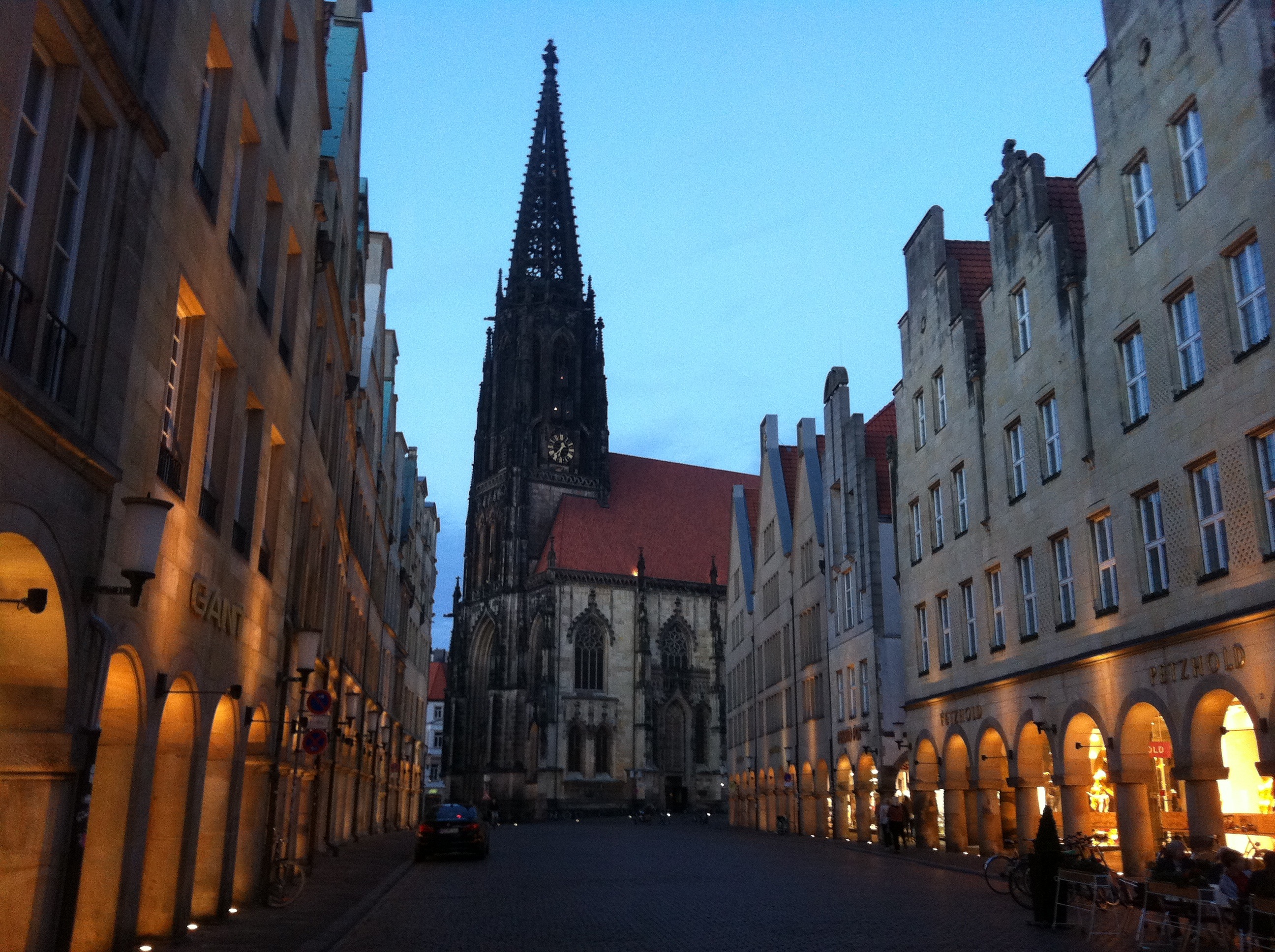
Münster

Münster


Planning (at least the first draft of) the exact cycle route is an important part of the overall planning of a long distance cycle trip. Just ‘following your nose’ leads you to main, busy roads. Insider secrets remain secrets.

In the summer of 2013 I intend to cycle from where I live in Eindhoven, the Netherlands, to the North Cape, via the Baltic Countries. I have put together a planned route which is made up of documented biking routes, collected from a range of different sources. I have collected this route in gpx format which can be viewed on my iPhone.

Here, I would like to list the biking route sources, and how to concatenate such routes to the ‘mother plan’ route.

Sources of the cycle route

Netherlands

The Netherlands has a great infrastructure for cycling. There is a dense network of signed bike paths that connect numbered ‘nodes’ throughout the country. Each node is between 1 and 10 km apart, and from each node, there are signposted routes to each of the neighbouring nodes. There is a bike route planning website which calculates suggested routes between any nodes that you specify. I used this to calculate a route from my house to the start of the German section of the R1 bike path which I will follow most of the way to Tallinn in Estonia.

Germany

I generated the route crossing Germany using the cool bike route planner Naviki. Many thanks to Oskar from the Polish cycling forum for his tips for Mecklenburg Vorpommern.

This route replaced my original route following the R1 bike path
– a long distance bike path from Bolougne in France to St. Petersburg in Russia. The German leg of this bike path (along with a huge number of cycle paths across Europe) is available in gpx format on the Lonvia ‘bike overlay’ to the OpenStreetMap open source map project. Simply scroll to the area of interest and click on ‘Routen’ to see a list of the paths displayed on the map. A gpx file can be downloaded for each of these maps.

Poland, Kalingrad, Lithuania

In Poland I will follow the EuroVelo 10 bike path. I found the route for this on bikemap.net. Many thanks to Pawel and the people on the Polish cycling forum for helping me out here.

After following the coast to Gdansk, I will make my way to the R1 cycle route which can be downloaded from the Lonvia bike overlay as described in the German section. The Polish section is not completely covered, though. I used the gpx files which are from Detlef Kaden. This book/CD combination is excellent, giving route information, as well as info on things to see, accommodation, and visa information for the Kalingrad Russian enclave.

Latvia

For Latvia, I used a combination of gpx files from Detlef Kaden (see Poland section), as well as cycling routes from the Lonvia OpenStreetMap overlay (see the German section). See the section below on how the information from these two sources was concatenated.

Estonia

For Estonia, I used routes from the Lonvia OpenStreetMap overlay (see the German section).

Finland

Eurovelo is a planned network of long distance cycle paths crossing from one side of Europe to the other. There are 14 planned routes, which are shown here. The routes are in different levels of completion. For most routes, there is no information available at all. For the Finnish sections, there is detailed information given in the form of google maps. I downloaded these routes and converted them into gpx to add to my overall route. (I describe this conversion below.)

Sweden

The Swedish leg is part of the ‘Cykelspåret längs ostkusten’. The gpx files for this can be downloaded here. These gpx files outline a path up the coast. When the coast is left at the top of the Baltic sea, there as so few roads, I figured that no special attention needs to be paid to look for small cycling roads. I used google maps to create the paths from here up to the Norwegian border. (Converting google maps to gpx is described below.)

Norway

In Norway I will follow the ‘Sun route’ as described in the Lonvia overlay for OpenStreetMap (see German section).

Converting and merging gpx files

When cycling, I use EveryTrail to track my trip, as well as to follow the planned route. EveryTrail uses gpx files.

To create the ‘mother’ route, stored in gpx file format, I concatenated individual gpx files. This concatenation is described here.

Here is an instruction video of how to convert google maps (kml) files to gpx file.

Sometimes I only wanted a piece of the path contained in a gpx file. I did the editing by hand, joining two gpx files at the correct place by matching the latitude and longitude coordinates to find where the paths cross.

Eindhoven Marathon 2012

Posted: October 14, 2012 in Running
Tags: , , ,

The marathon is a 42 km mind game. After 35 km, when the carbohydrates in the body are gone, the body is screaming out to stop. And you need to go on. You have come this far. This happens every time. The end is murder. And the finish line is sweet.

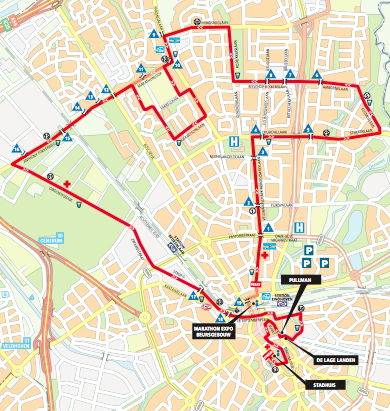
Route of the Eindhoven Marathon

Route of the Eindhoven Marathon

I enrolled for the Eindhoven marathon at the start of the year when it was far away on a distant horizon. My training was a bit patchy. I went on lots of very long runs on the weekends (between 25 and 37km), but didn’t do enough basis training during the week. I hardly ran at all in the last two weeks, pausing to let some back pain get better. I had a bit of a stomach bug for the last few days, too. So: for the first time I went to run in the marathon without expecting to run under 4 hours. I would run at the speed that felt right. I was prepared to stop if it was clear that the stomach bug hadn’t gone. This lack of self-imposed stress meant that I slept well. The weather was fantastic for a marathon: 13C and cloudy. The stage was set.

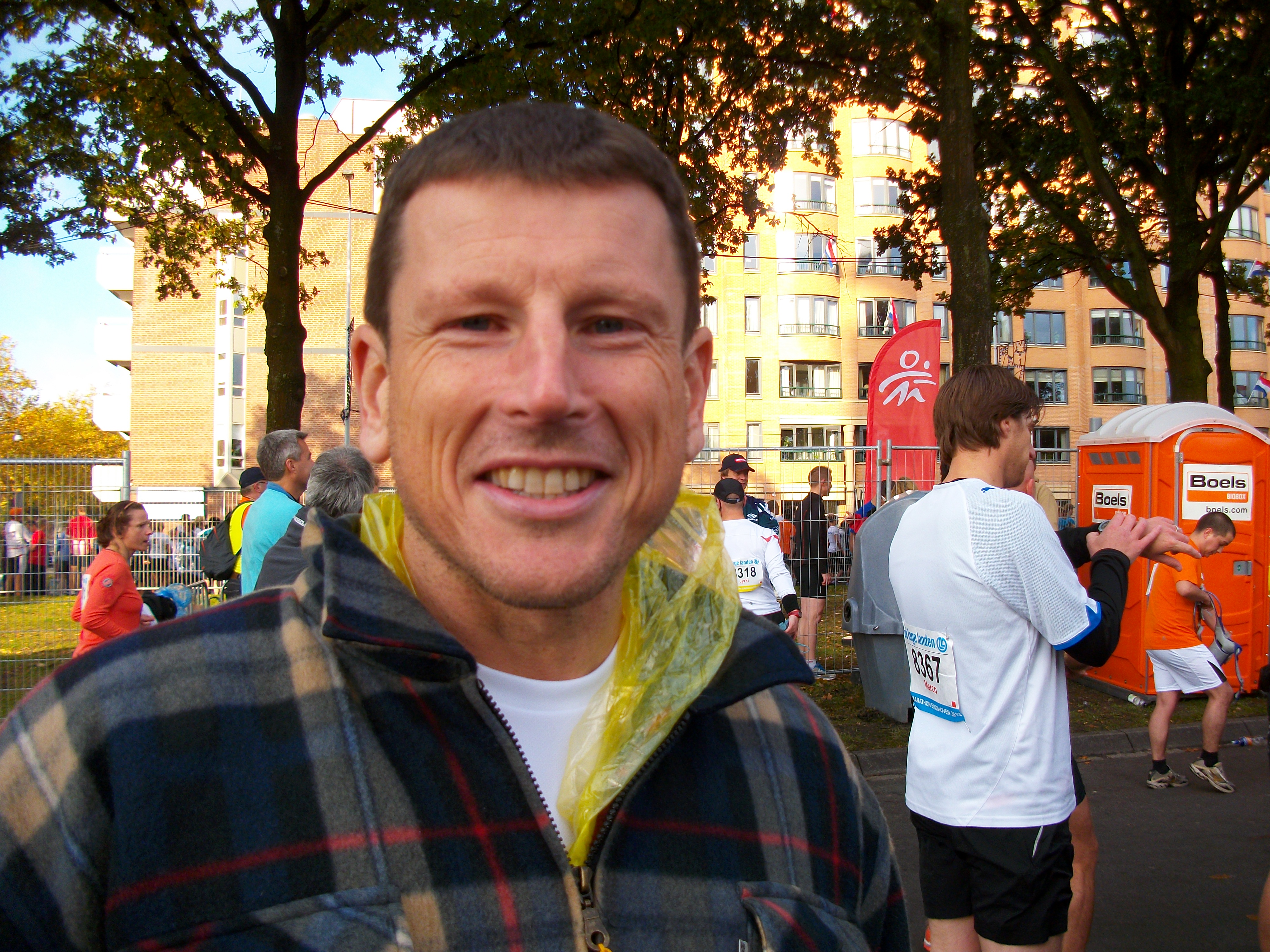
The famous lumberjack jacket as my mascot.

The famous lumberjack jacket as my mascot.

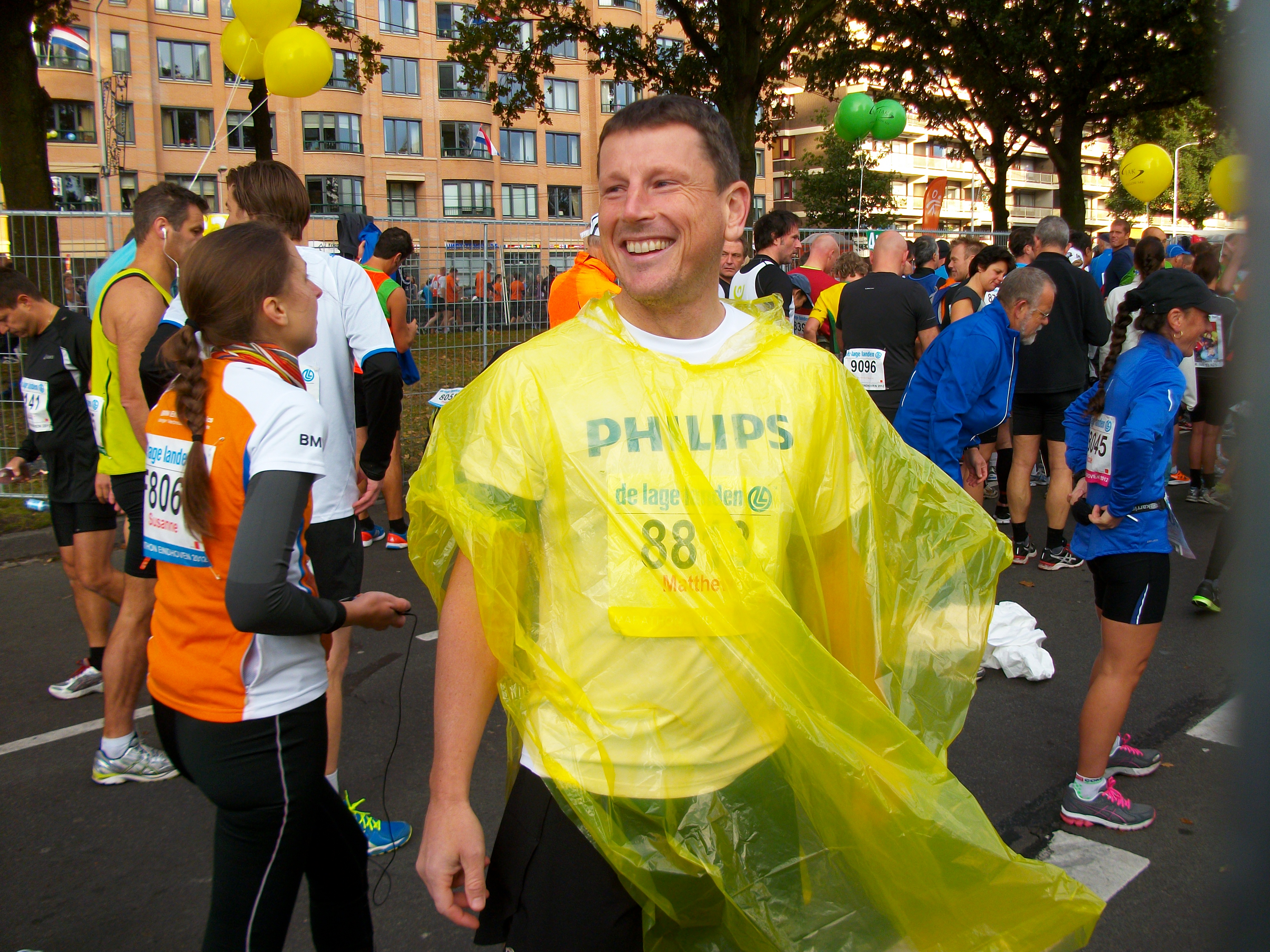
Before the start.

Before the start.

km 4: The start was not crowded and I had the space to run at my speed. I soon found it to be 5:46 per km. Fine. I passed a building with the temperature indicated. 11C. And it was cloudy. Perfect.

km 10: The mind starts making big plans for what the final time is going to be. At this rate I will be a tick over 4 hours, but might make my best time of 4:03:57. My heart rate monitor is not working so I run on feeling. I feel fine! No sign of the stomach bug.

km 16: The sun has come out, but I am running in the green leafy shade on the dead straight Oirschotsedijk. Keeping the speed of 5:46. Looking good. I dance with the music as I pass the music stands.

km 18: Zwaanstraat. Everyone is pushed to the left of the road. A Kenyan was going to lap us. A thin stick figure sprints past. I briefly toyed with the idea of trying to run with him for 50m or so. I didn’t. A complete waste of energy, and I probably wouldn’t be able to anyway. He was amazingly fast. He ended up running the marathon in 2:05.

km 21: Half marathon in just over 2 hours. Feeling good to run the second half. I start thinking: if I could just run at 5:30 per km I could make the marathon in under 4 hours. Maybe this time I could run the second half faster than the first. Now that I didn’t push too much at the beginning. I decide to wait until about km 30 to see how I feel then. The speed of 5:46 per km is maintained.

km 25: The sun is out. I pass the building with the thermometer. 14C. The first signs of people starting to walk. I still feel fine.

km 30: I am not going to increase the speed. But, the 5:46 per km is still possible. Just 12 km to go. I can start to feel the energy seeping away, but still feel ok. I start calculating what is needed to run under 4:03:57. I can’t do too precise calculations, though. The brain is switching off, as is the rest of the body. All energy is going into running.

km 35: Oirschotsedijk: Energy gone. The speed has slipped to 6:30 per km. I’m still OK, but a record is not going to happen. No worries. That wasn’t what I expected anyway. Let’s just finish this in a reasonable time.

km 38: Man, this is awful. What am I doing here? I shuffle along at 7:00 per km and stop for the odd walk. Walking is not much slower than running. People start to pass me. I am approaching the centre of Eindhoven where the masses are watching. I stop at the drink stops and drink and drink. And then I shuffle forward. Only 4 km to go. It feels like an eternity.

km 40: In the centre. I have run through the gauntlet of people cheering. I try to find the quieter places to walk. My body needs to stop, and it feigns it needs a toilet break. Desperately. There is a bar with the door opened wide. Welcoming. All tricks of the mind. I shuffle forward. The 4:15 pace setters have past me. My time will be slower than 4:15. I’m not bothered. Let’s just finish this.

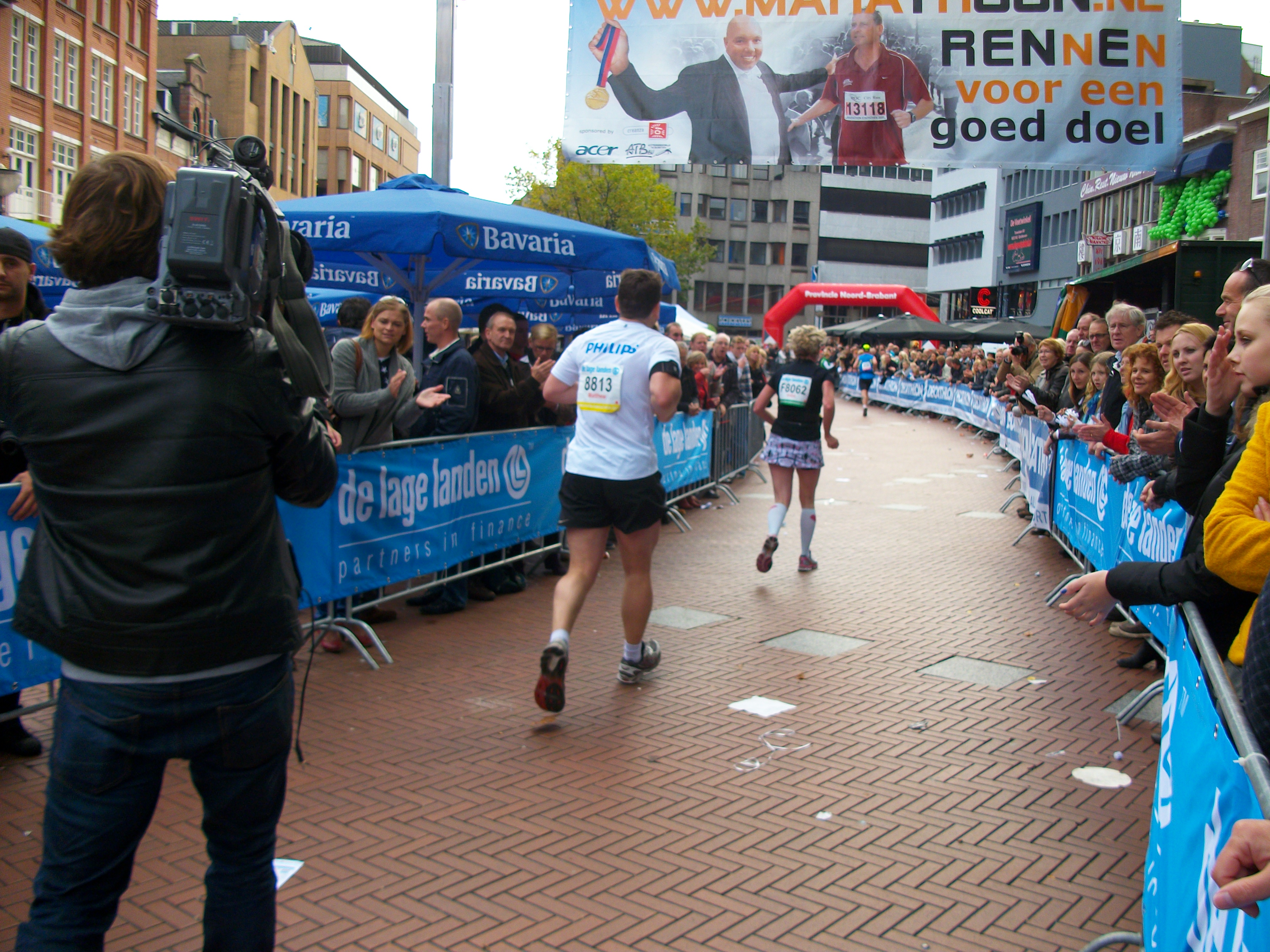
The Matthew shuffle.

The Matthew shuffle.

km 42: The last km is signposted 1000m, 750m, 500m, 100m. Each of those signposts feels like they are a whole km apart. I can’t even shuffle forward without stopping between them. Then the finish comes. I stop. I have made it. The time was 4:19:47. And I am content.